

Femvoro Solutions
Launch A Focused Private-Label Range
Start with your market, target customers, sales channels and intended price positioning. Femvoro helps you define the opening product range, specifications and packaging needed for your first launch, with a clear role for each SKU.
Start With Your Market
Before choosing the products, clarify where the brand will compete and who it will serve. Your market, customers, sales channels and intended price positioning give the opening range a clear direction and help determine which specifications and packaging choices deserve priority.
Your Market
Which country or region will you launch in? Identify the market you want to enter and the competing products customers already know, giving the product and packaging brief a relevant local context.
Your Customers
Who should the range serve, and what matters in their daily routines? Consider the usage occasions, product preferences and buying priorities that will help define the role of each product.
Your Sales Channels
Will you sell through e-commerce, retail stores, distributors or a combination of channels? Consider how buyers will discover, compare and purchase the range when planning pack formats and product presentation.
Your Price Positioning
Where should the brand sit in the market? Clarify the intended selling price and customer expectations, then use that positioning to guide product features, pack counts and packaging priorities.
Plan Your Opening Range.
Use your market brief to define a focused first assortment. Choose the product categories, give each SKU a clear role and establish which products belong in the opening range before expanding into a broader collection.
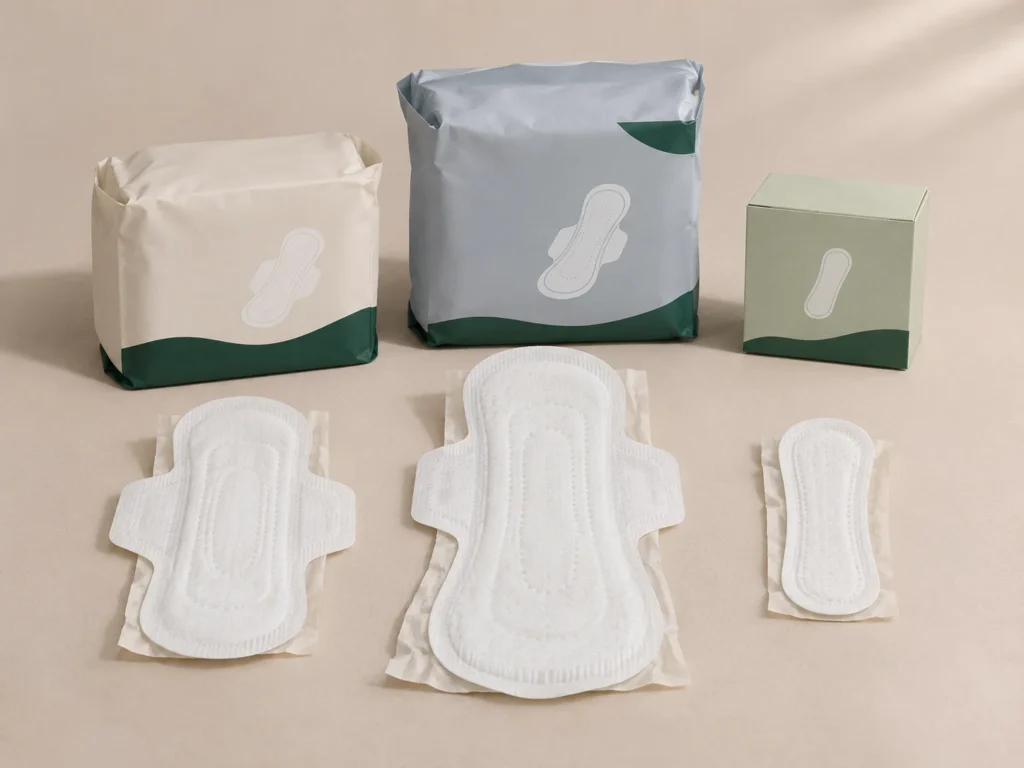
Illustrative range: day pads, night pads and panty liners. The final product mix and SKU count are shaped around your project.
Choose The Product Categories
Identify the categories and usage occasions most relevant to your customers. Build the opening selection around those needs, considering how each product fits your brand positioning and chosen sales channels.
Define Each SKU’s Role
Clarify what each SKU contributes to the range, such as everyday use, night-time coverage or a different pack format. Use that role to guide dimensions, pack counts and how products are distinguished on the shelf or online.
Set Launch Priorities
Review the proposed assortment against your budget, order quantities and channel plans. Agree which products are needed for the first launch and which can be considered for later development as the range evolves.
Define The Product And Packaging.
Once the opening range is outlined, turn each SKU’s role into a product, packaging and evidence plan. Clarify what needs to be specified, what requires a sample and which questions need further review before the details are approved.
Planning Area
What To Define
What To Review
Product Requirements
What To Define
Set the dimensions, material requirements and construction priorities for each product. Relate these choices to its intended use and identify the aspects of product performance that need evaluation.
What To Review
A working specification and suitable reference samples, with open questions recorded for development and sample review.
Packaging Requirements
What To Define
Agree on packaging formats, individual wrapping and pack counts. Plan the brand information and visual differences that help customers distinguish the products across your chosen sales channels.
What To Review
Packaging samples, artwork layouts and the information proposed for each SKU, checked against the agreed product and brand brief.
Samples And Evidence
What To Define
Identify the questions that samples, comparisons or supporting documents need to answer. Agree on the evaluation approach and the basis for any performance comparisons before finalizing product messages.
What To Review
Relevant sample comparisons, agreed test methods and available supporting documents, reviewed against the product claims being considered.
What Your Project Plan Covers.
Bring the key decisions into a working plan for your first launch. These four planning areas connect the market opportunity with the opening range, development requirements and commercial assumptions. The specific outputs are defined in the agreed project scope.
01 / Market
Market Opportunity Brief
Summarize the commercial starting point so product and packaging decisions can be assessed against the same market priorities.
- Target market and customer profile
- Sales channels and intended price positioning
- Customer needs and relevant competitor references
02 / Range
Opening Range And SKU Roles
Set out a focused first assortment, showing why each product belongs in the range and how the proposed SKUs work together.
- Proposed product categories and opening SKUs
- Usage occasions and the role of each product
- Pack-count direction and launch priorities
03 / Development
Product, Packaging And Evidence Plan
Record the development direction and the questions that still need to be resolved through samples, artwork review or supporting information.
- Product specifications and material priorities
- Packaging formats, artwork and SKU differentiation
- Sample evaluation and supporting evidence requirements
04 / Launch Preparation
Commercial Assumptions And Launch Checklist
Make the commercial assumptions and outstanding preparation tasks visible, helping your team understand what needs confirmation before launch.
- Cost assumptions and quantities by SKU
- Approval points and timing dependencies
- Product content, sales materials and channel preparation
Questions About Launching Your Brand
Find answers about planning your first range, working with existing brand materials and confirming the product details before moving forward.
Yes. Start with your target market, customers, sales channels and intended price positioning. We can use that information to discuss a suitable opening range, then work through the specifications and packaging requirements with you and the relevant development partners.
The opening range should reflect your customers’ needs, channel plans and available budget. Each SKU should have a clear role. We’ll help you consider which products are needed for the first launch and which could be introduced later, rather than setting a fixed number for every project.
Yes. Share your logo, brand guidelines and any existing packaging artwork. These provide a starting point for discussing packaging formats, information layout and how customers will distinguish the products. Any additional design work can be defined within the project scope.
Sample evaluation can help you assess product options before approving the final specifications. We’ll discuss suitable sample arrangements, the questions you want to evaluate and any development costs or timing involved. Your feedback can then guide revisions to the proposed range.
These depend on the product construction, materials, packaging, quantities by SKU and development work required. Once the opening brief is clearer, we can review those requirements with the relevant partners and identify the commercial conditions and timing for your project.